
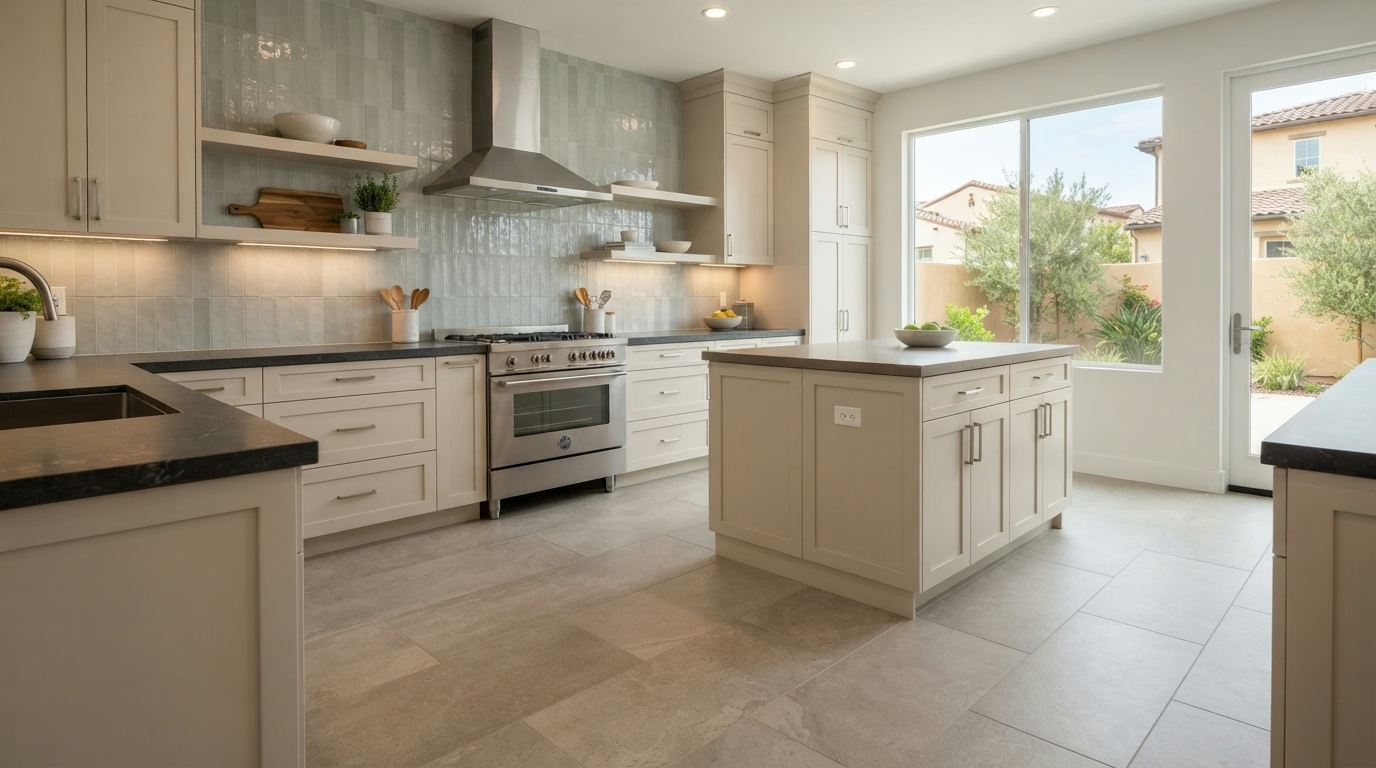
Kitchen Flooring Installation in Orange County
Durable, moisture-resistant kitchen flooring installed by a licensed Orange County contractor, from large-format tile to waterproof luxury vinyl plank.
Plan Your Flooring Upgrade
Your Kitchen Floor Upgrade Starts Here, We Handle Everything
Old kitchen flooring shows every year of daily use, from grout lines that never come clean to boards that have started to cup near the sink.
We handle removal, subfloor repair, material sourcing, and installation as one project, so you're not coordinating separate crews for demo and install.
Tell us about your kitchen and current flooring below, and we'll recommend a material that fits your budget and daily routine.
Get Your Free Flooring Estimate
Tell us about your kitchen floor project. A local project manager replies within one business day.
Kitchen Flooring Options
Kitchen Flooring Types We Install In Orange County
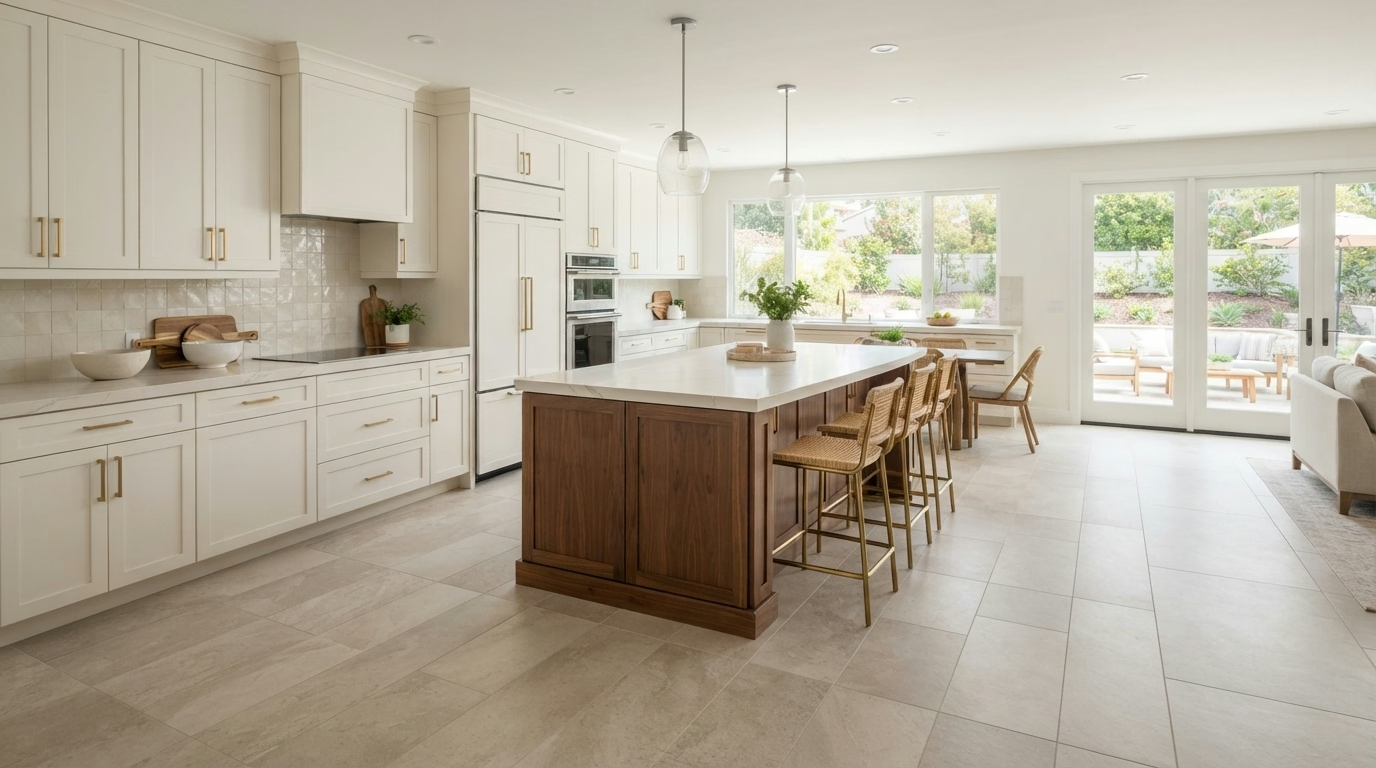
Tile Flooring
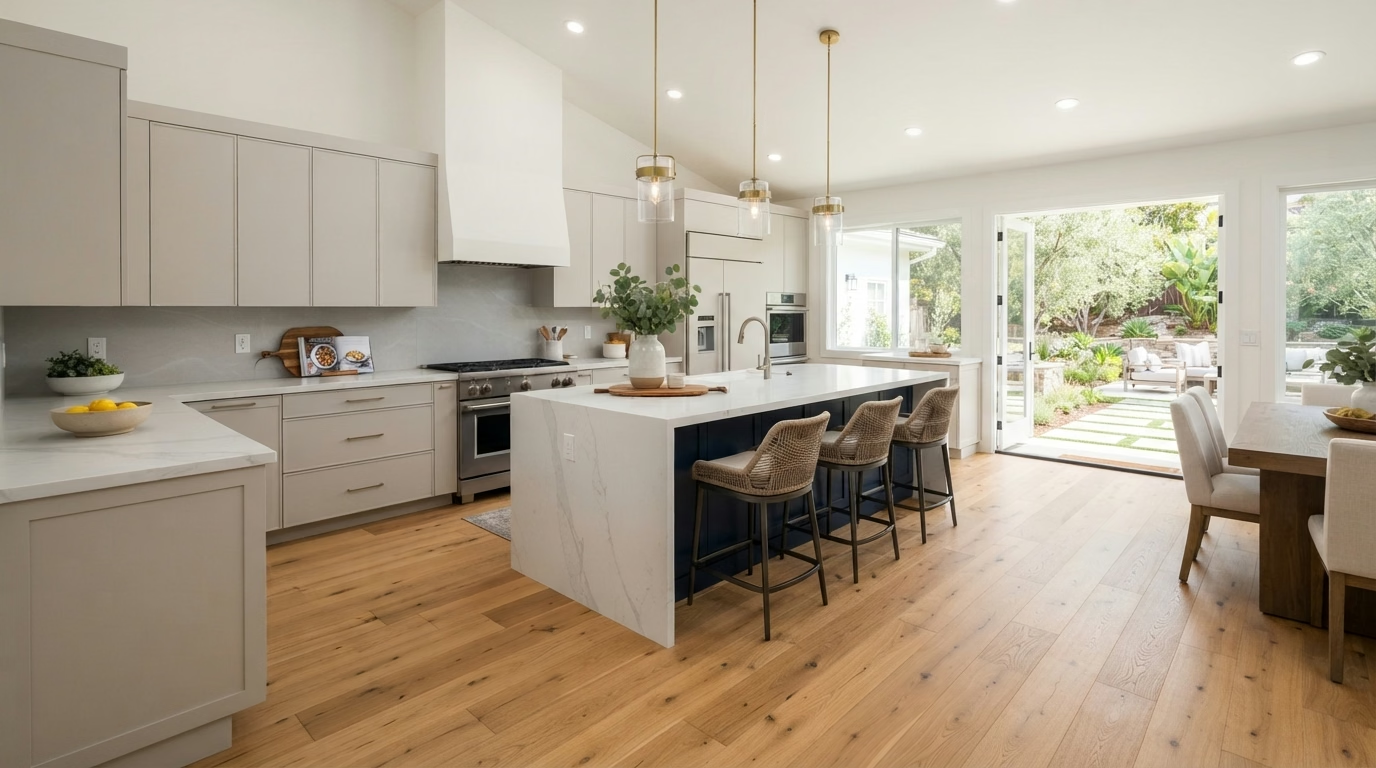
Hardwood Flooring
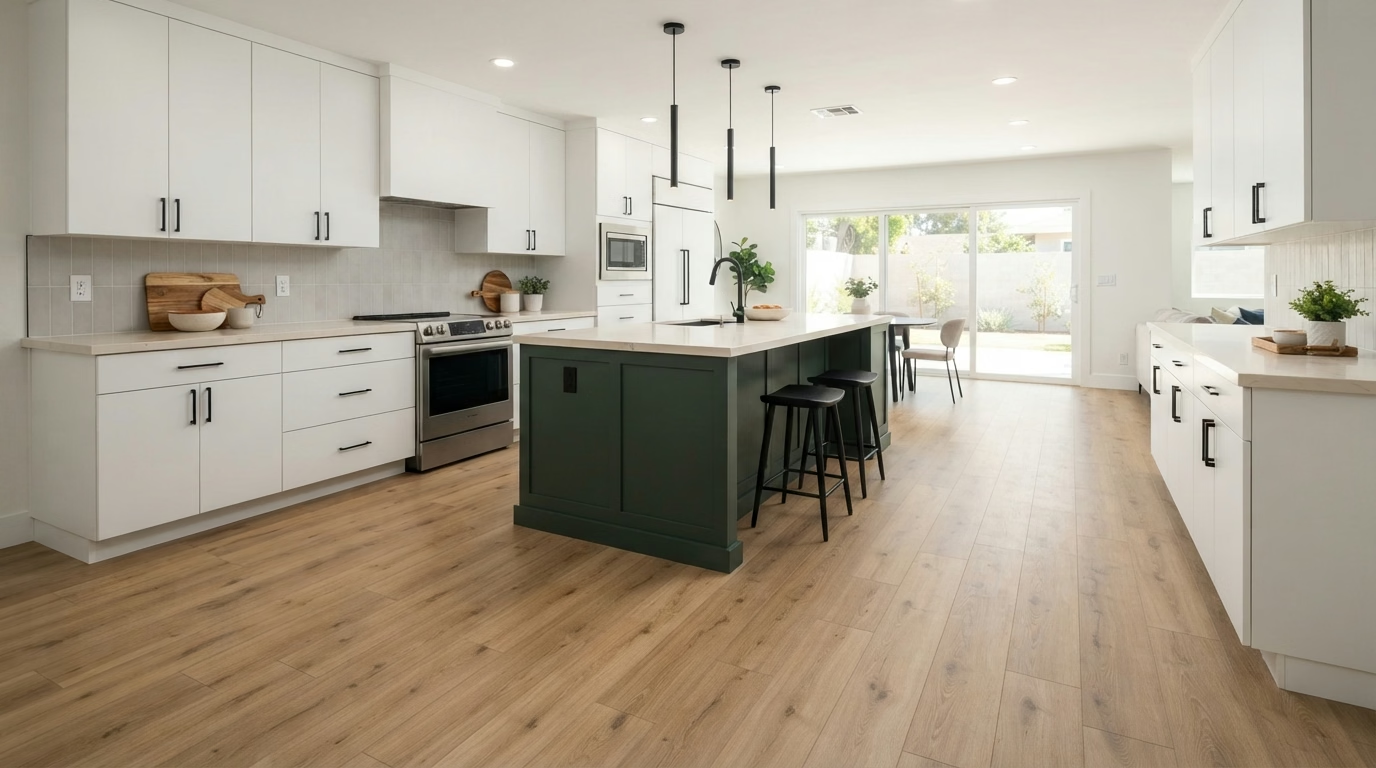
Luxury Vinyl Plank (LVP)
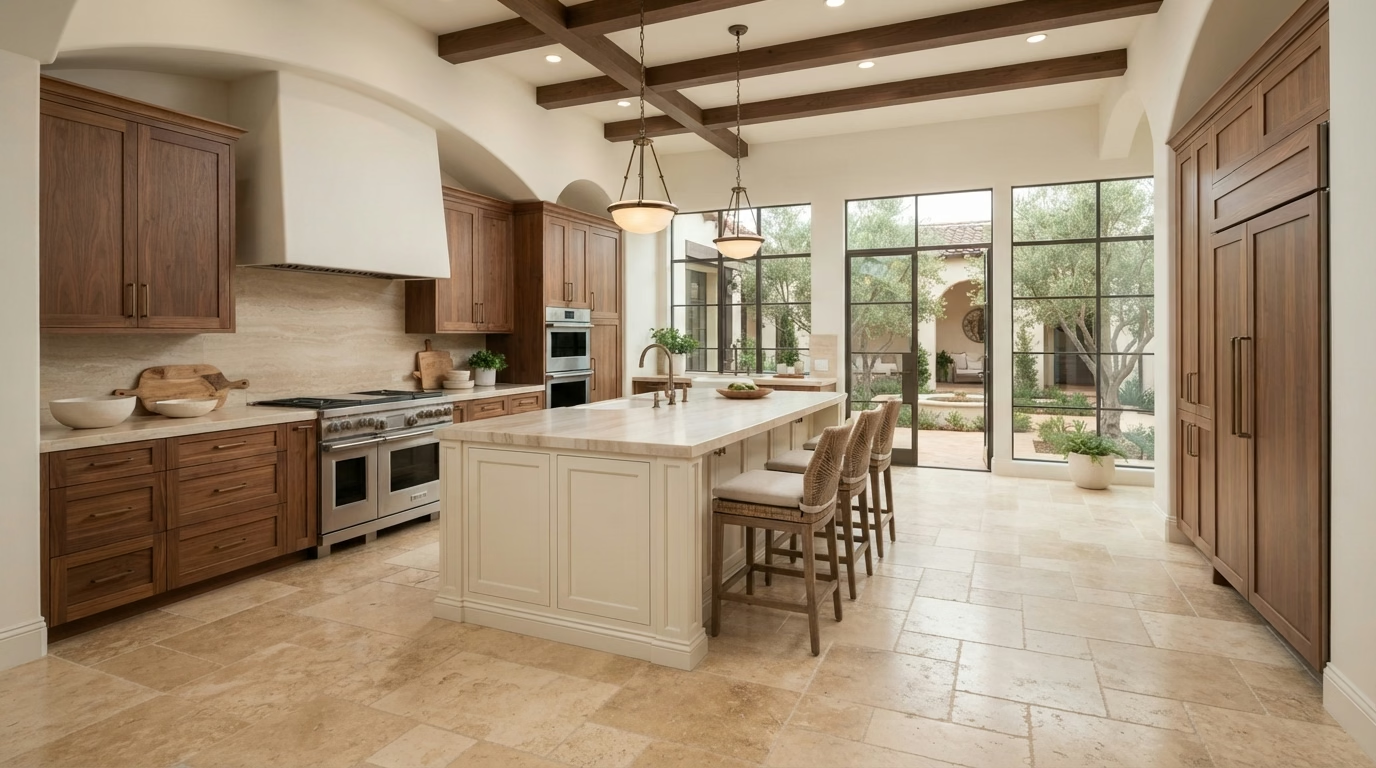
Natural Stone Flooring
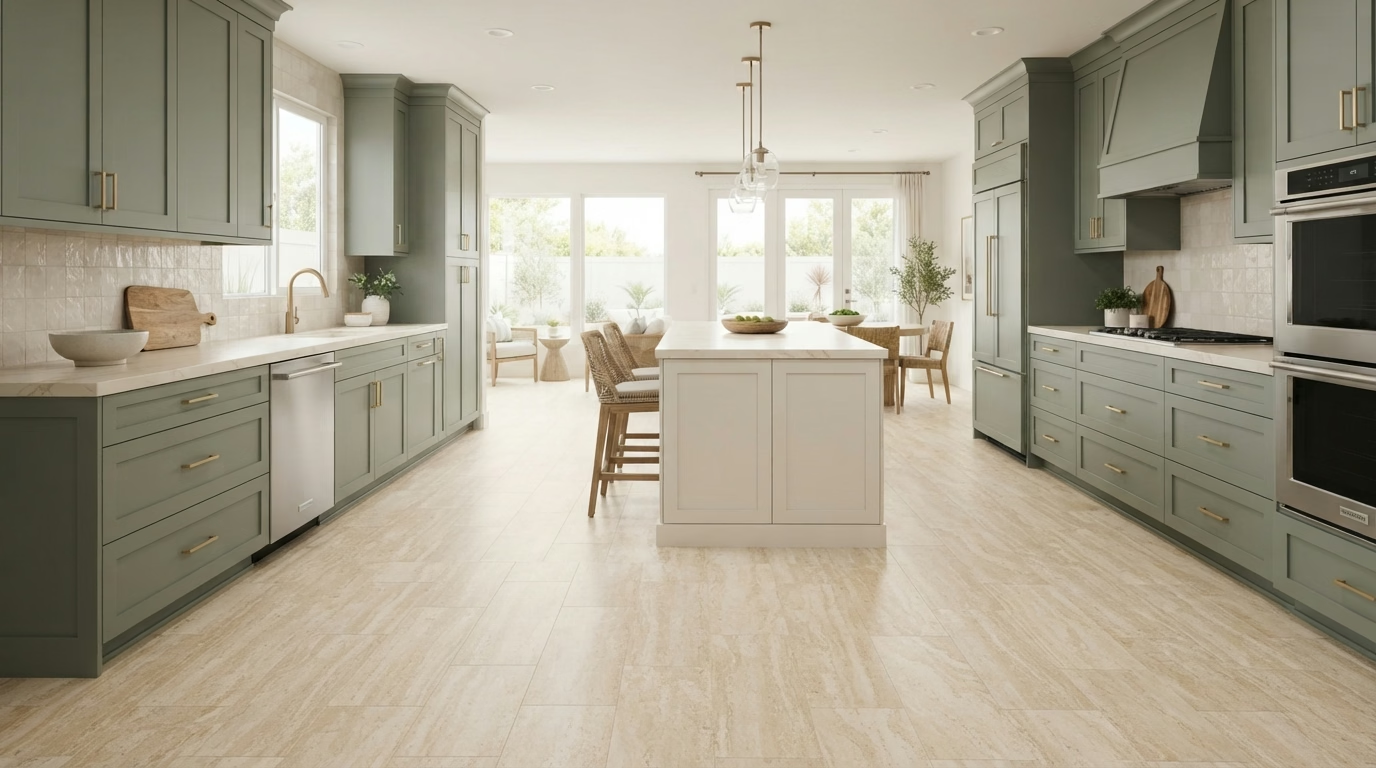
Luxury Vinyl Tile (LVT)
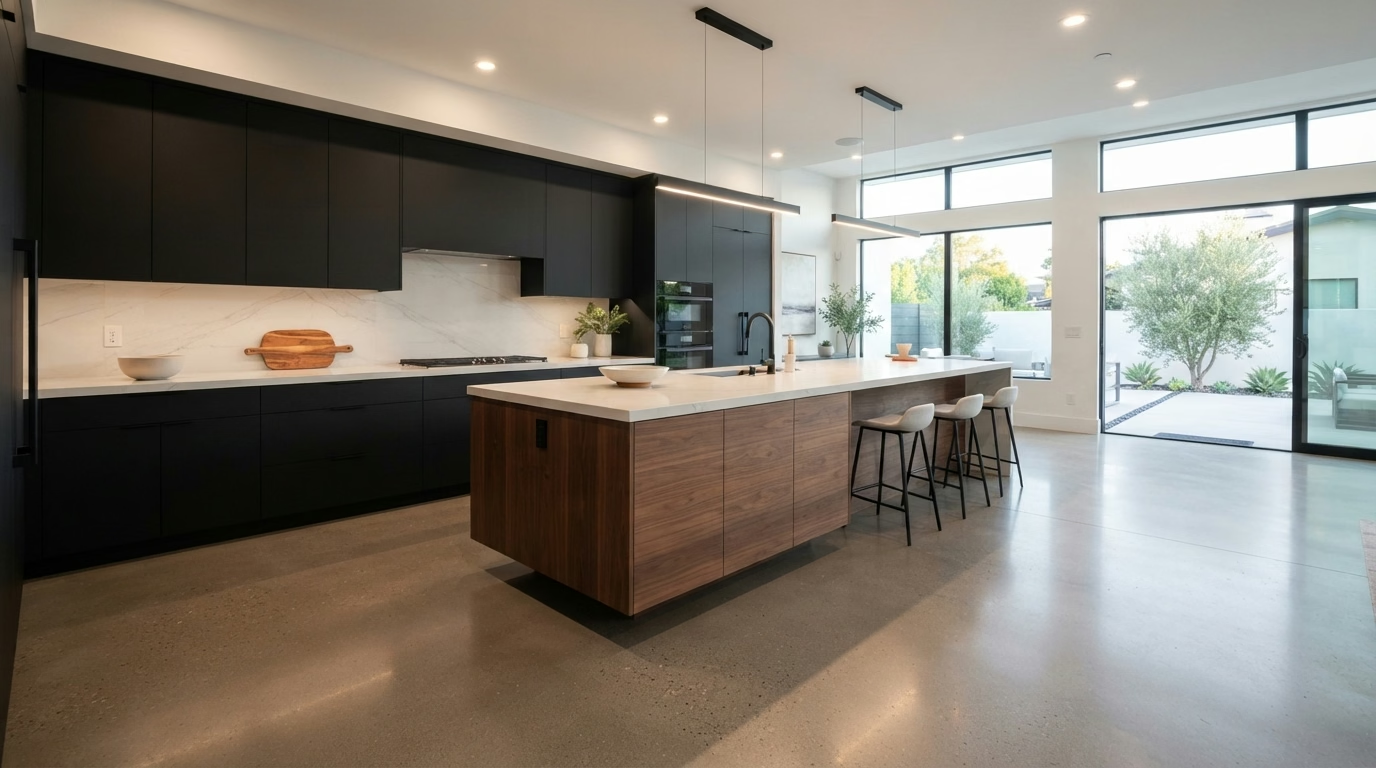
Concrete & Epoxy Flooring
Flooring Selection Guide
How To Choose The Right Kitchen Flooring
Durability & Traffic
Match your flooring's hardness rating to how much daily foot traffic your kitchen sees.
Moisture Resistance
Kitchens need flooring that handles spills, steam, and daily cleaning without warping.
Style & Aesthetics
Your floor should tie together your cabinet color, countertop, and overall kitchen style.
Budget & Long-Term Value
Balance upfront cost against expected lifespan and resale impact for your home.
Maintenance Requirements
Some materials need periodic sealing, while others only need routine cleaning.
Subfloor Condition
Your existing subfloor's condition determines which materials can be installed directly.
Flooring Homeowner Feedback
What Orange County Homeowners Are Saying
Real feedback from real kitchen remodels across Orange County.
“Our galley kitchen finally works for our family. The team handled the permit with the city and never missed a deadline.”
Karen D.
Irvine, Orange County
“The waterfall island turned out better than the rendering. Clean job site every single day, which mattered with two kids at home.”
Marcus T.
Newport Beach, Orange County
“We compared four contractors. Pro Kitchen Remodeling was the only one who explained Title 24 without us having to ask.”
Priya S.
Anaheim, Orange County
“Cabinet quality is noticeably better than our old builder-grade boxes. Soft-close everything, and it still closes perfectly a year later.”
Dave & Linda M.
Huntington Beach, Orange County
“They found a plumbing issue behind our old cabinets before it became a bigger problem. Saved us real money down the road.”
Alicia R.
Mission Viejo, Orange County
“One project manager for the entire remodel. I never had to chase down an electrician or a tile guy myself.”
Brian K.
Costa Mesa, Orange County
“Our small kitchen now feels twice the size. The layout plan they proposed was smarter than anything we had thought of.”
Sophie L.
Tustin, Orange County
“Pricing was itemized down to the hinge. No surprise invoice at the end, which is rare in this industry.”
James O.
Yorba Linda, Orange County
Flooring Material Options
Kitchen Flooring Materials We Use
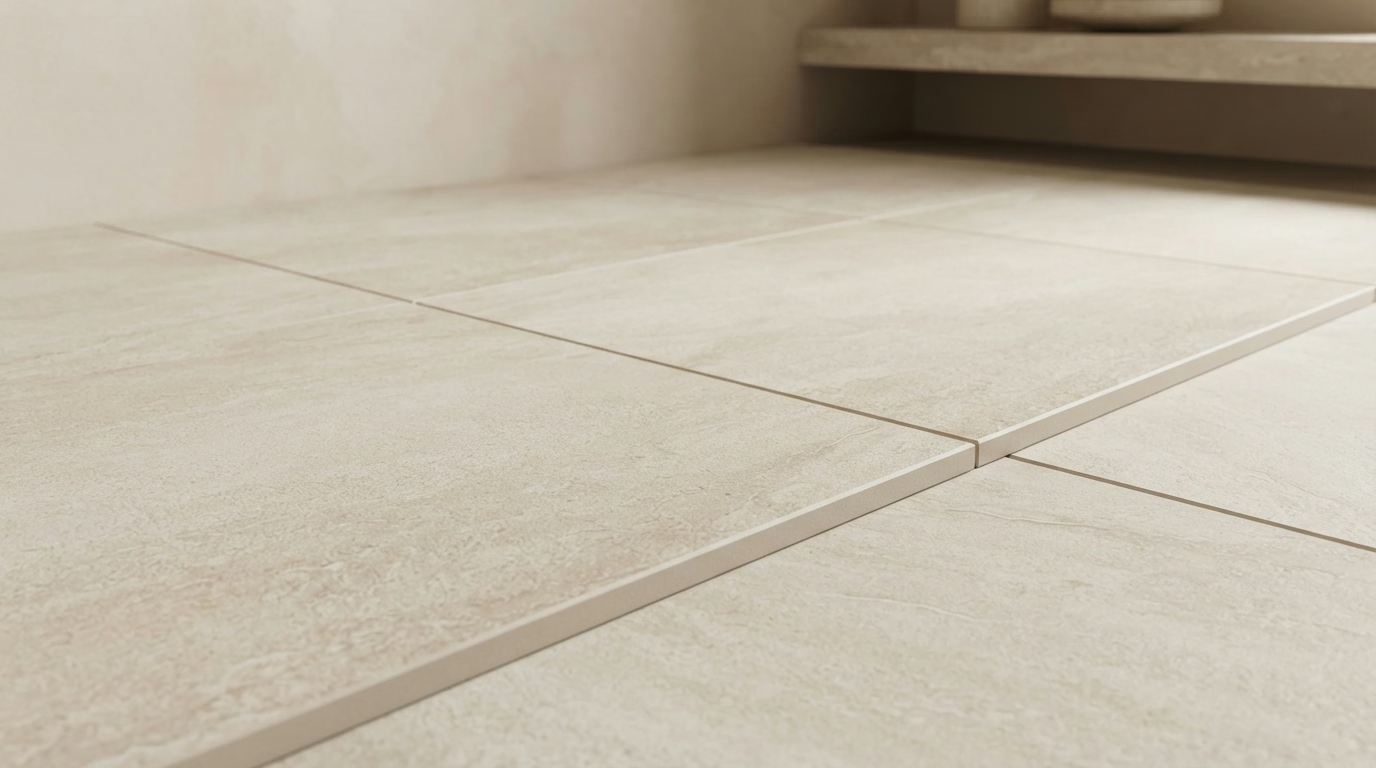
Porcelain Tile
Dense, low-porosity tile that resists water and scratches.
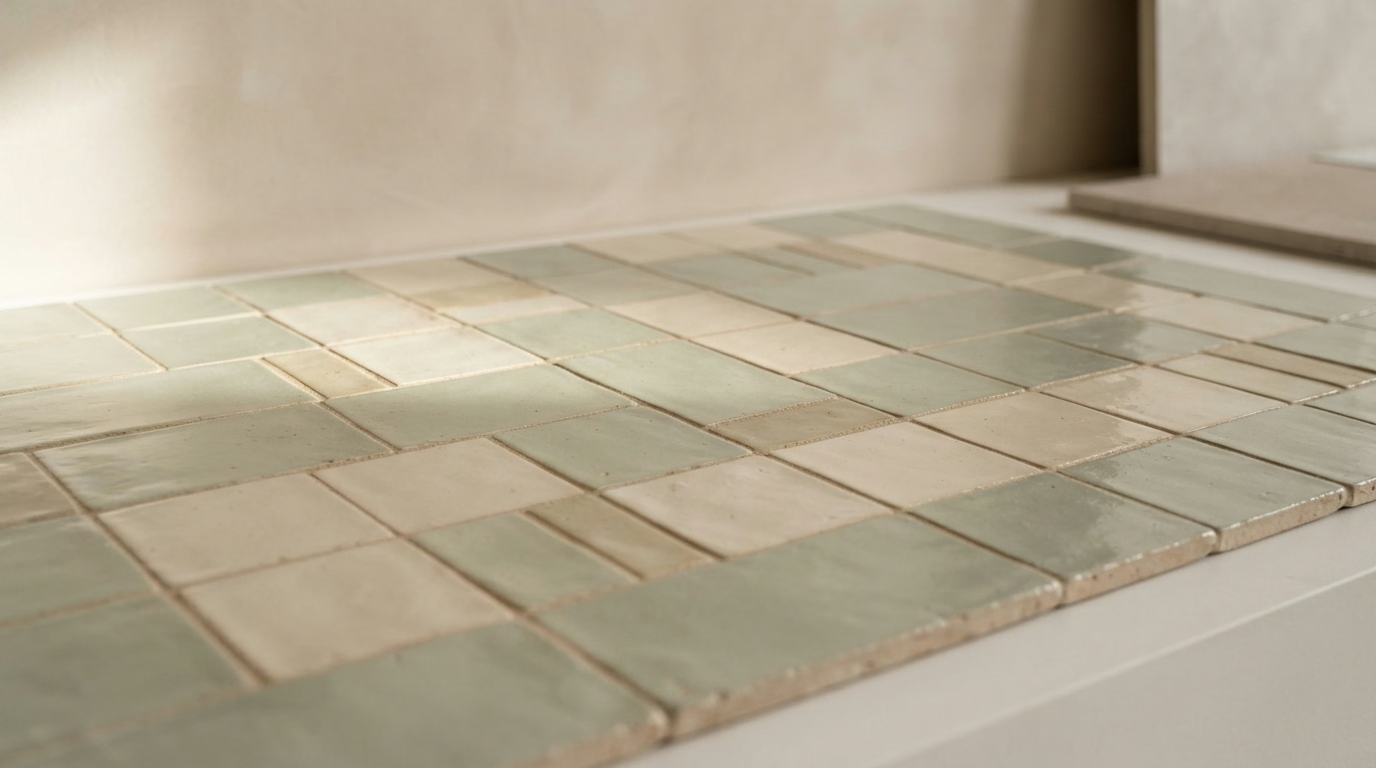
Ceramic Tile
A budget-friendly, durable option available in nearly unlimited styles.
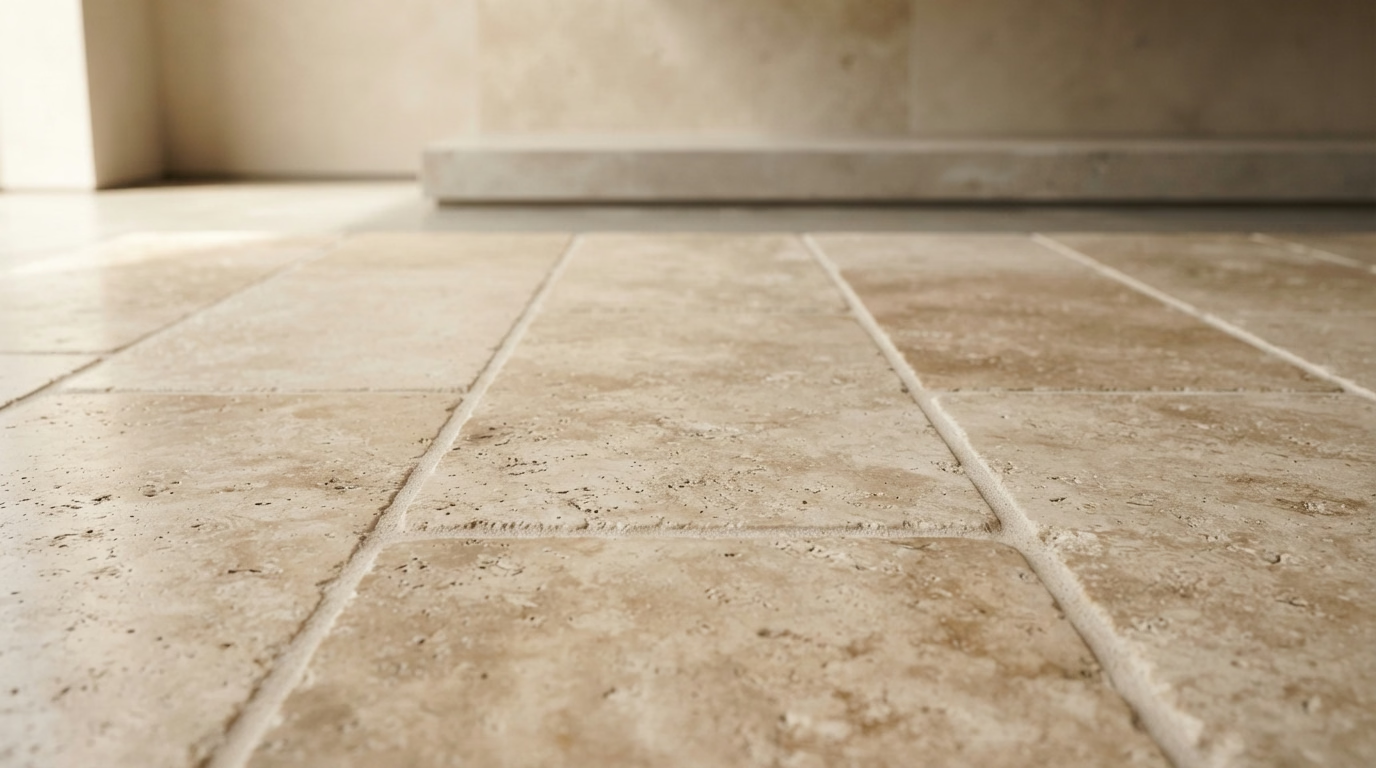
Natural Stone
Travertine, slate, and limestone bring texture but need periodic sealing.
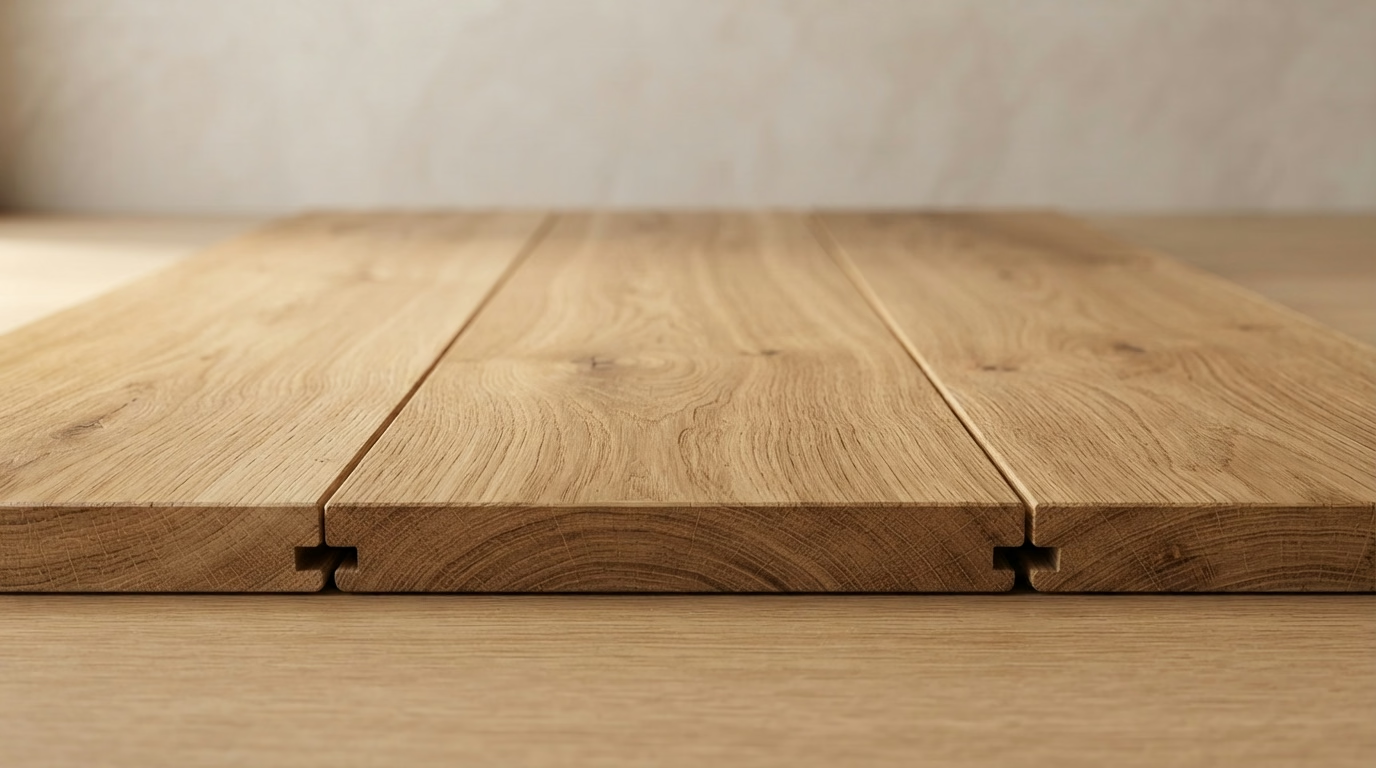
Solid Hardwood
Classic warmth that can be refinished multiple times over its lifetime.
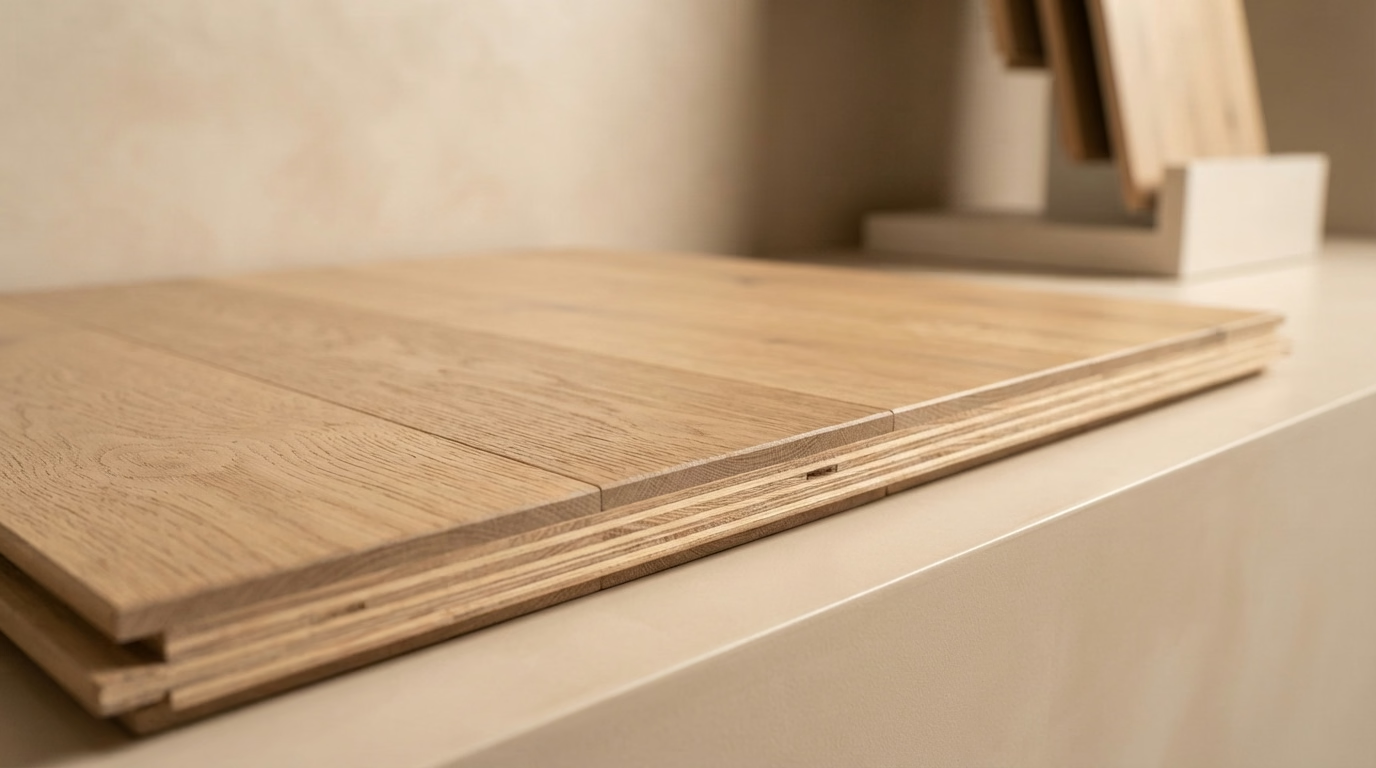
Engineered Hardwood
A hardwood look with better moisture stability than solid wood.
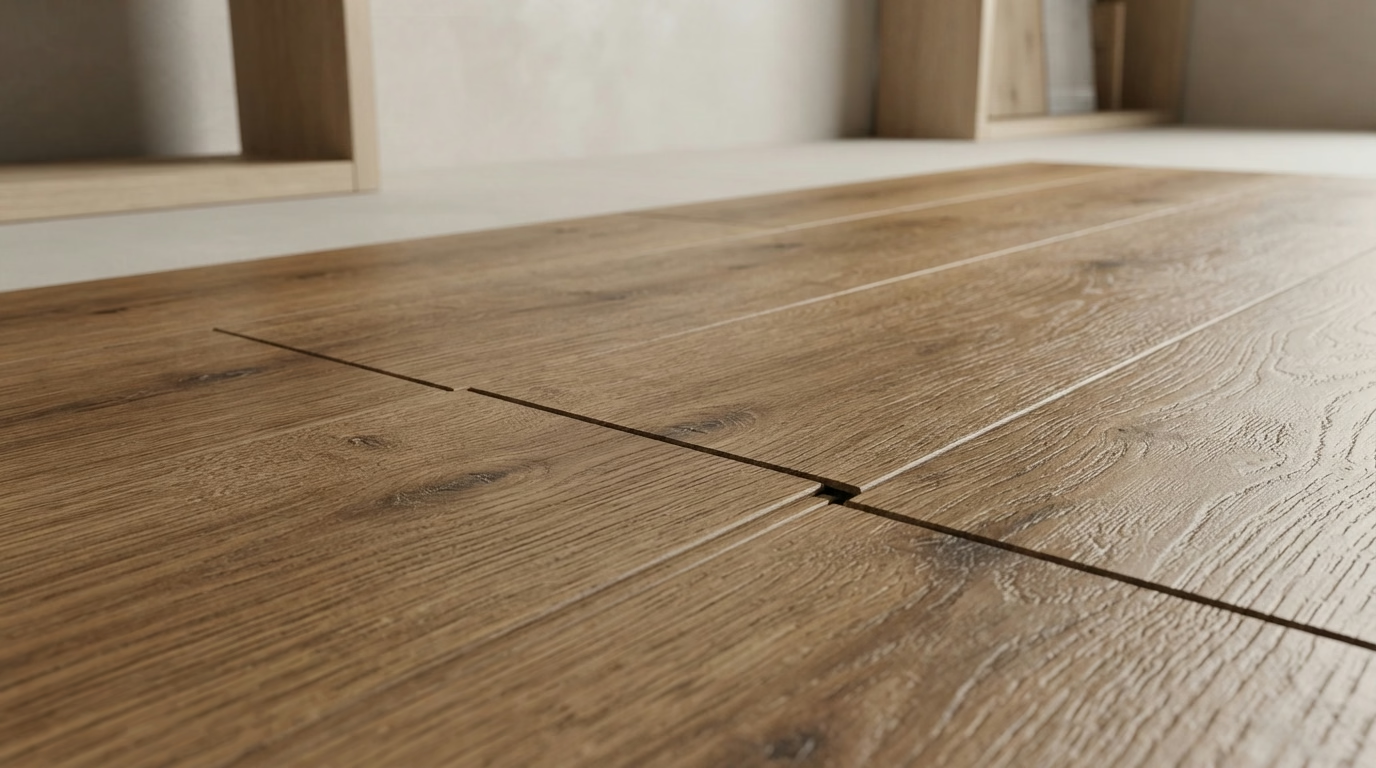
Luxury Vinyl Plank (LVP)
Fully waterproof and scratch-resistant, ideal for busy kitchens.
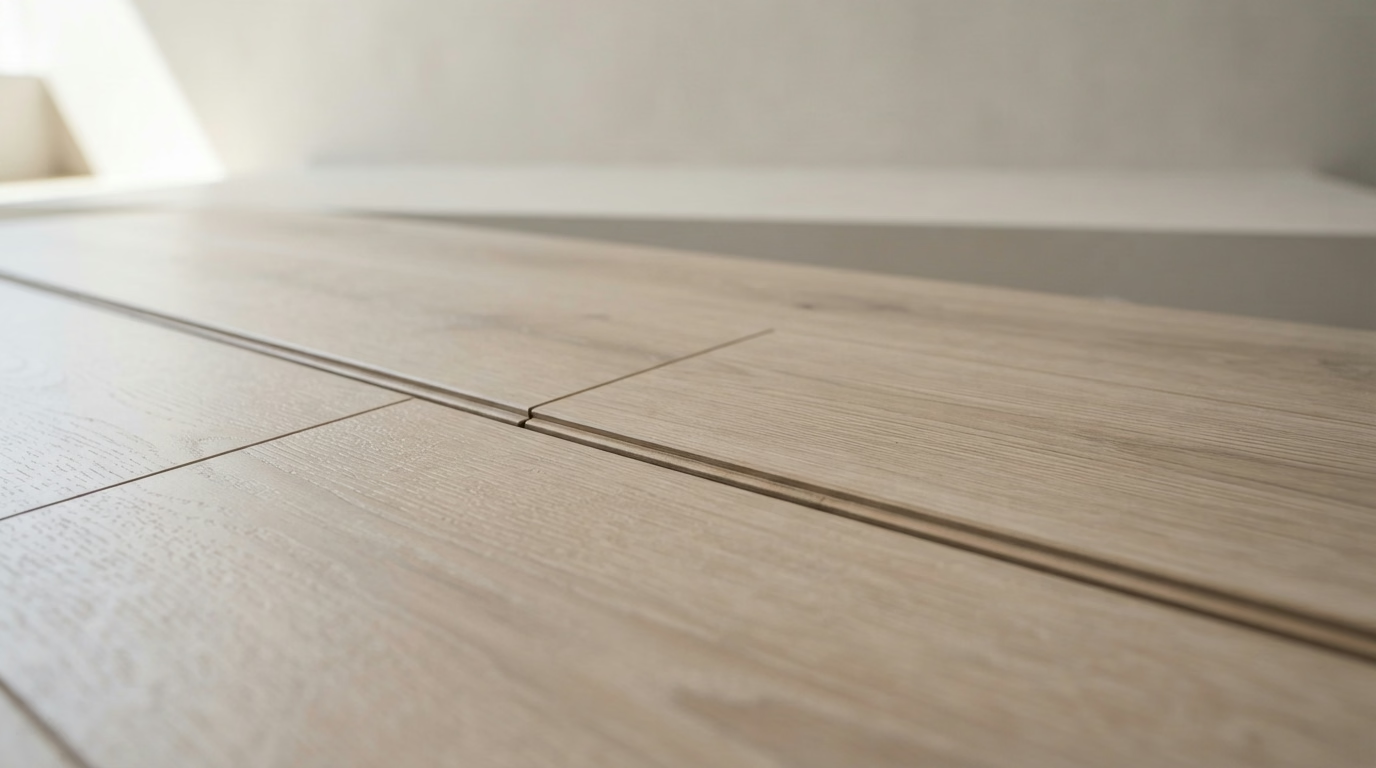
Laminate
An affordable wood-look option, best for lower-moisture kitchen zones.
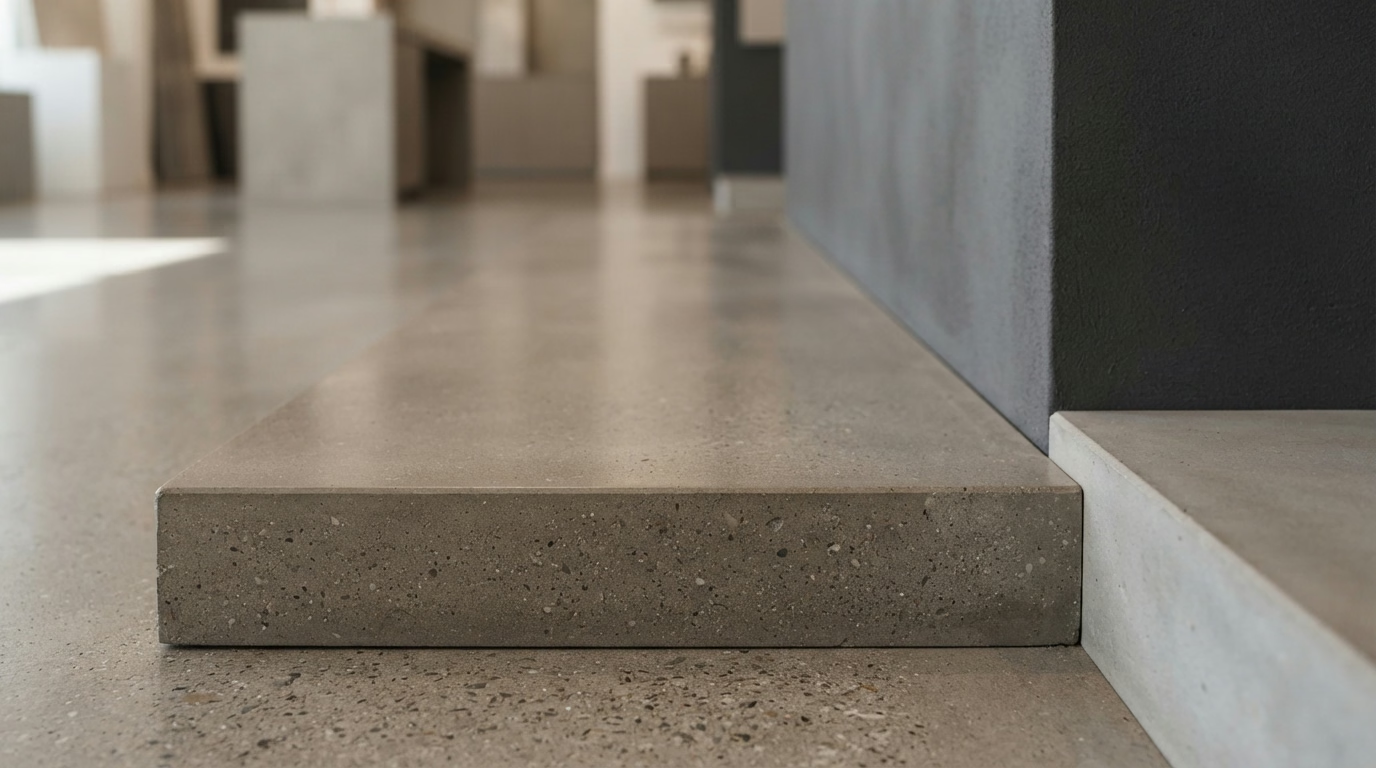
Polished Concrete
An industrial-modern surface that is durable and easy to maintain.
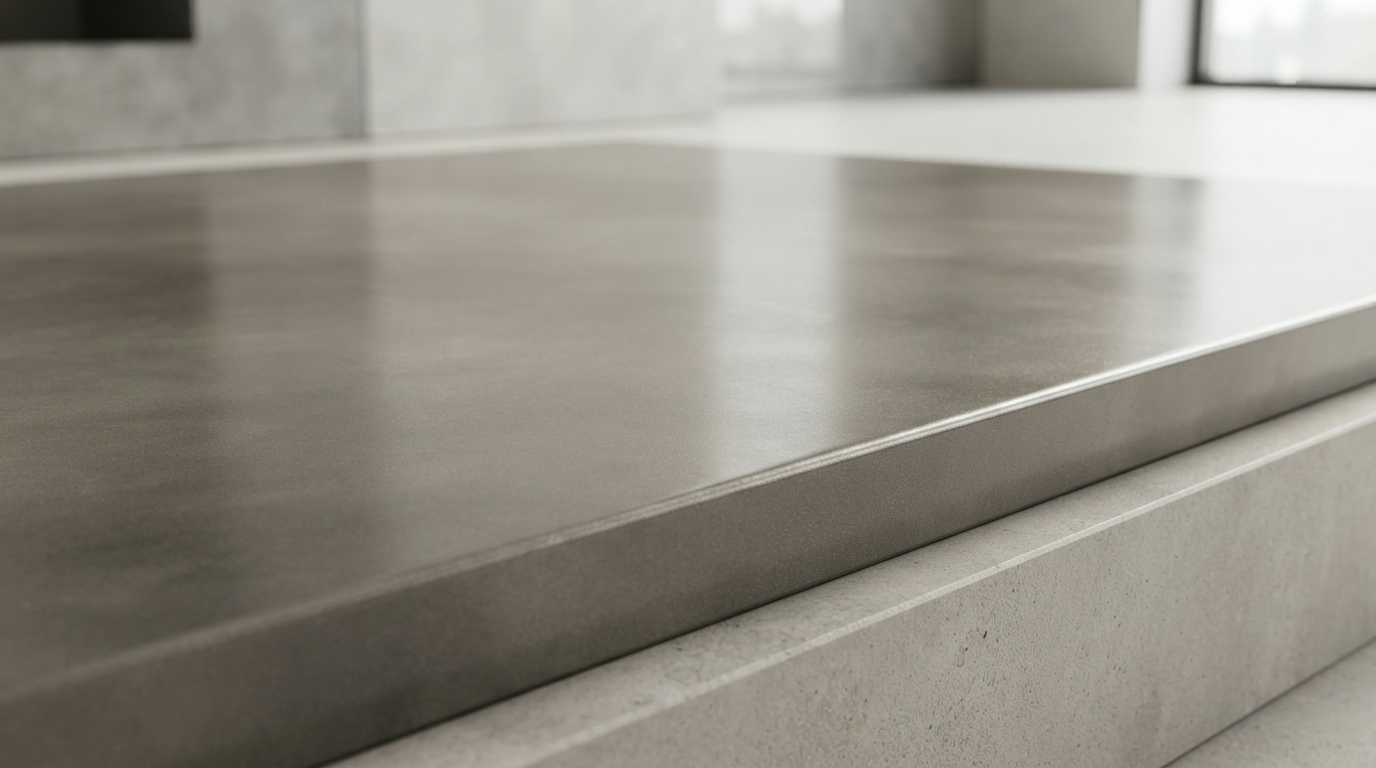
Epoxy Coating
A seamless, chemical-resistant finish popular in modern open kitchens.
Compare Your Options
Porcelain Tile, LVP or Engineered Hardwood: Which Fits Your Kitchen?
Kitchen flooring has to handle spills, chairs, foot traffic and frequent cleaning, so choose for the household rather than appearance alone. Porcelain tile resists water and is available in many sizes and finishes, but it can feel firm underfoot and may require careful grout maintenance. Luxury vinyl plank is generally more comfortable and comes in wood-look finishes; check the product's water-resistance claims, wear layer and subfloor requirements. Engineered hardwood brings natural wood character, but it still needs protection from standing water.
Consider slip resistance, sunlight exposure, pets, children and whether the kitchen connects directly to other rooms. A material that works in a coastal bungalow may not be the best fit for a busy open-plan home with a large dog. Ask to see installation samples and product care instructions. The finished floor height also matters where new flooring meets existing hallways, cabinet toe kicks or appliance openings. Comparing these everyday factors is more valuable than choosing solely by a photo.
Subfloor Preparation
Why Subfloor Preparation Matters Before Flooring Installation
A good-looking kitchen floor starts with the surface underneath it. Before installing tile, luxury vinyl or wood, check whether the subfloor is flat, sound and suitable for the selected product. Uneven spots can make rigid tile crack or leave floating flooring with movement underfoot. Moisture problems should be identified and addressed before new material covers them. The correct preparation varies by substrate and manufacturer requirements, so one method is not appropriate for every kitchen.
Plan where the finished floor meets adjacent rooms, exterior doors, thresholds and existing cabinets. Changing floor thickness may affect dishwasher clearance or the appearance of toe kicks. Confirm whether old flooring removal, leveling, moisture testing, underlayment and transitions are included in the estimate. If the project also involves new cabinets, coordinate their installation sequence so the flooring detail is correct for the chosen material and layout. These decisions are often less visible than the finish but have a major effect on the end result.
Comfort And Maintenance
Choose Flooring That Is Comfortable and Practical to Maintain.
A floor can be visually attractive while still being difficult to live with. In areas near the sink and dishwasher, think about how the surface feels when wet and whether the manufacturer's finish is suitable for residential kitchen use. Extremely glossy finishes may show water spots and can be slippery under some conditions. Textured surfaces may improve grip but can require more attention during cleaning. Ask for the product's relevant slip-resistance information and care recommendations.
Consider the amount of time people stand at the counter, particularly in households that cook frequently. Hard surfaces such as stone and porcelain have different underfoot feel from vinyl or wood. In a kitchen open to the living space, sound, transitions and visual continuity also matter. Protect new flooring from sharp chair legs and clean spills using the methods appropriate for that material. Selecting the right product depends on comfort, water exposure, maintenance and the actual room conditions, not a universal 'best flooring' claim.
Review Your Estimate
What a Kitchen Flooring Estimate Should Include.
The installed price of a kitchen floor depends on more than the product square footage. Removal of old material, disposal, subfloor repairs, leveling, underlayment, adhesives, tile pattern and transition strips may all affect the scope. For tile, ask about grout and movement joints; for wood or LVP, verify the appropriate installation system and any acclimation requirements specified by the manufacturer. A proposal should identify the exact product and where it will be installed.
Confirm how appliances will be moved and protected and whether baseboards or cabinet toe kicks need finishing work. Ask what happens if a damaged subfloor becomes visible after demolition and how that change would be priced and approved. A written quote with separate preparation and installation items makes it easier to compare contractors. It also helps you understand whether a lower figure reflects a genuine saving or simply leaves out necessary work.
Our Kitchen Flooring Installation Process
A well-installed kitchen floor starts with the subfloor, not the finish material. Here's how we sequence every installation to make sure it lasts.
Plan My Kitchen FlooringMeasure & Material Selection
We measure your kitchen and help you pick a flooring type and finish.
Subfloor Inspection & Prep
We check for moisture, leveling issues, and repair the subfloor as needed.
Old Floor Removal
Existing flooring is removed and disposed of responsibly.
Installation
New flooring is installed, cut, and sealed to manufacturer specifications.
Final Walkthrough
We inspect transitions, seams, and finish quality with you before wrapping up.
Recent Flooring Projects
Kitchen Flooring Projects Completed Across Orange County
A look at recently finished kitchens in neighborhoods near you.
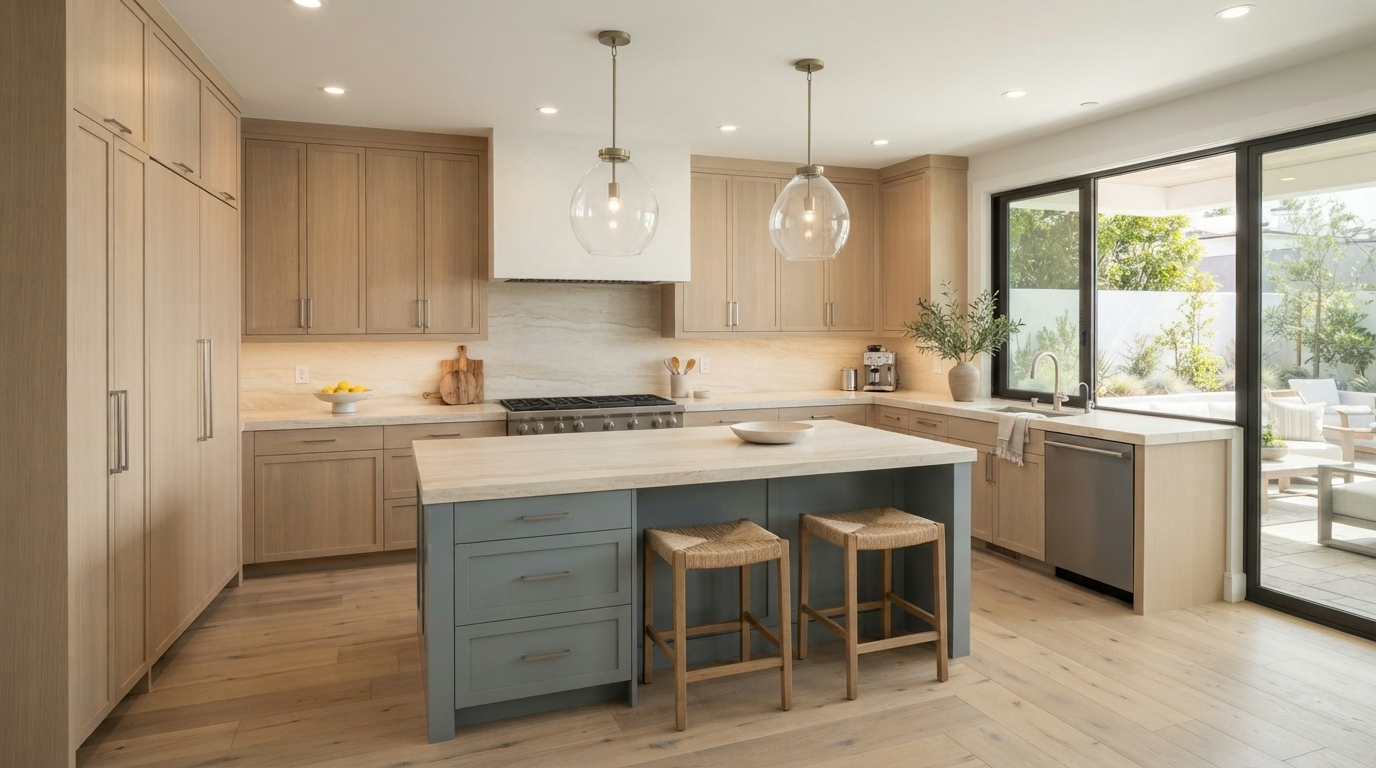
1420 Bayview Ave
Newport Beach, CA
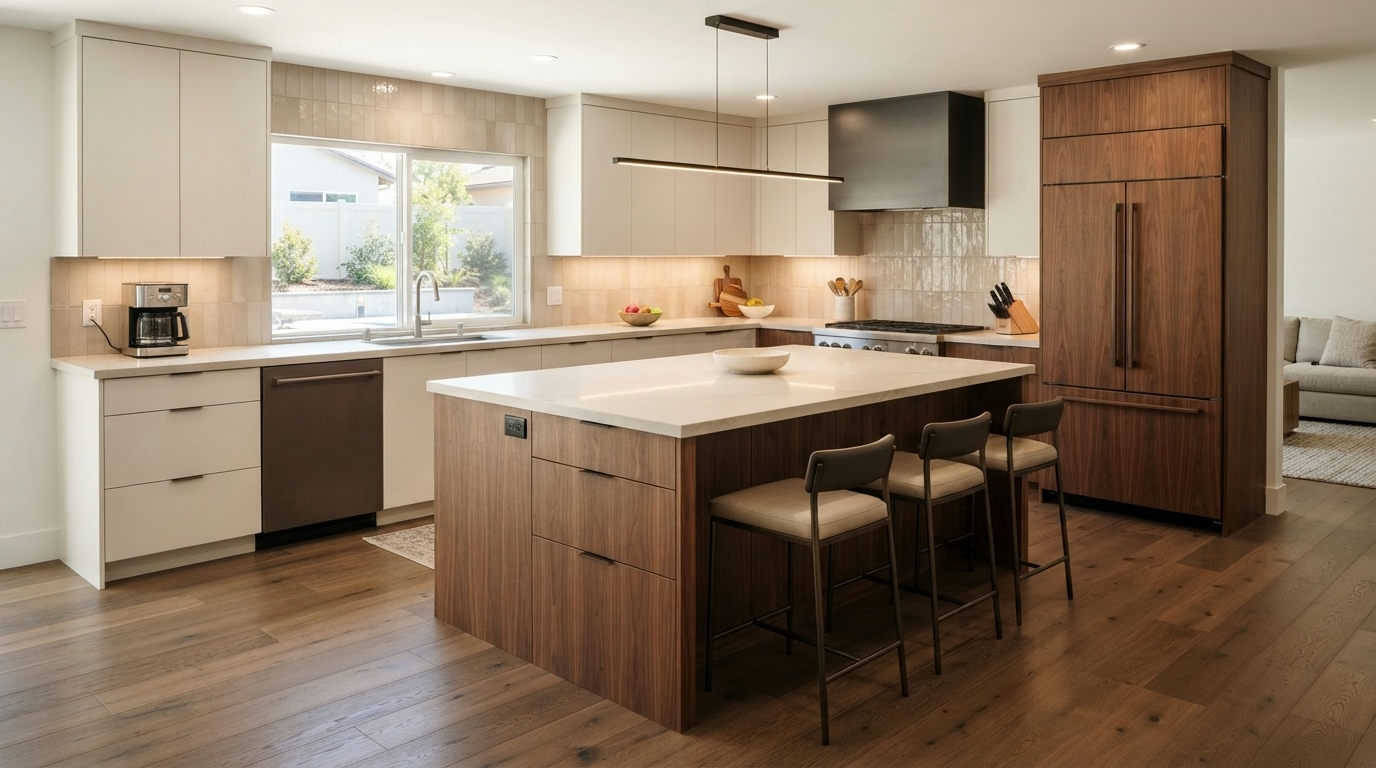
88 Sundance Ln
Irvine, CA
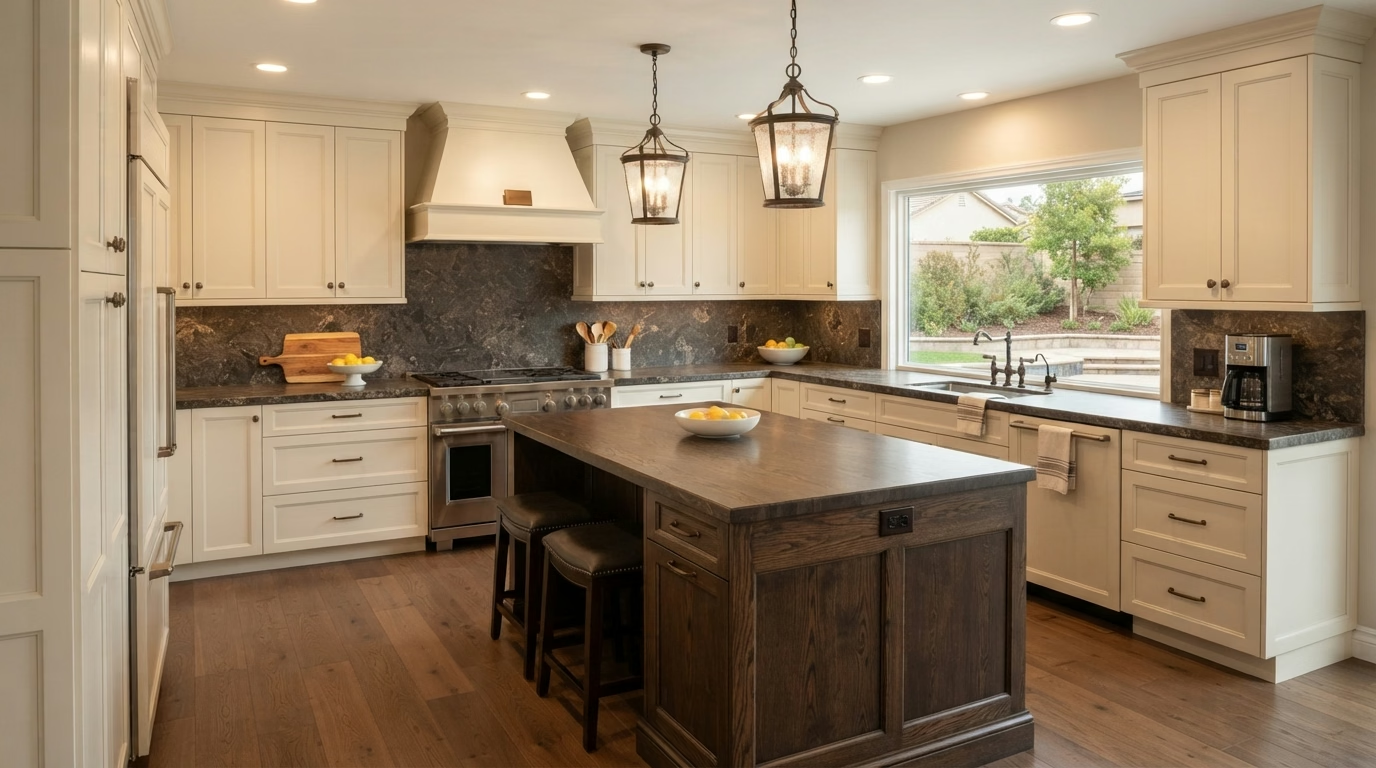
2217 Park Vista Dr
Anaheim Hills, CA
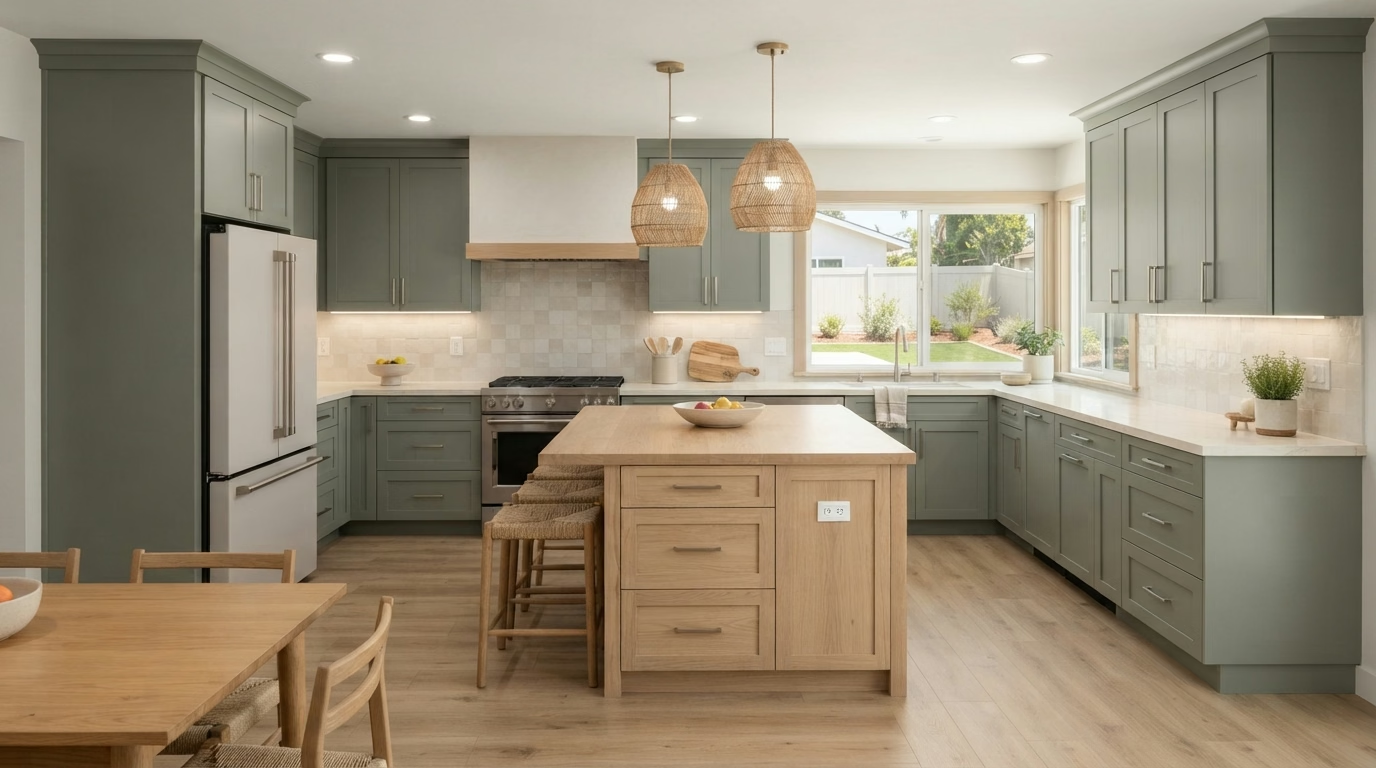
541 Ocean Breeze Ct
Huntington Beach, CA
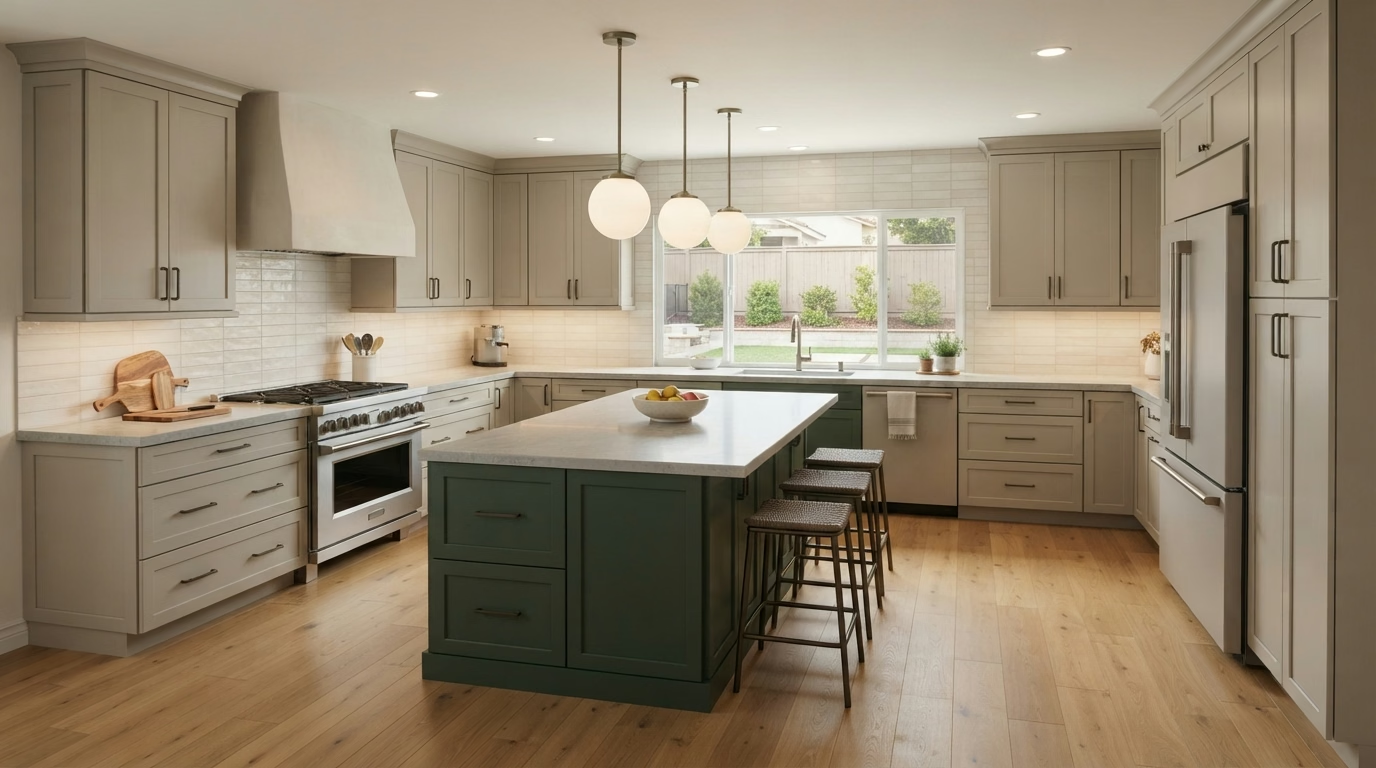
3305 Vista Grande
Mission Viejo, CA
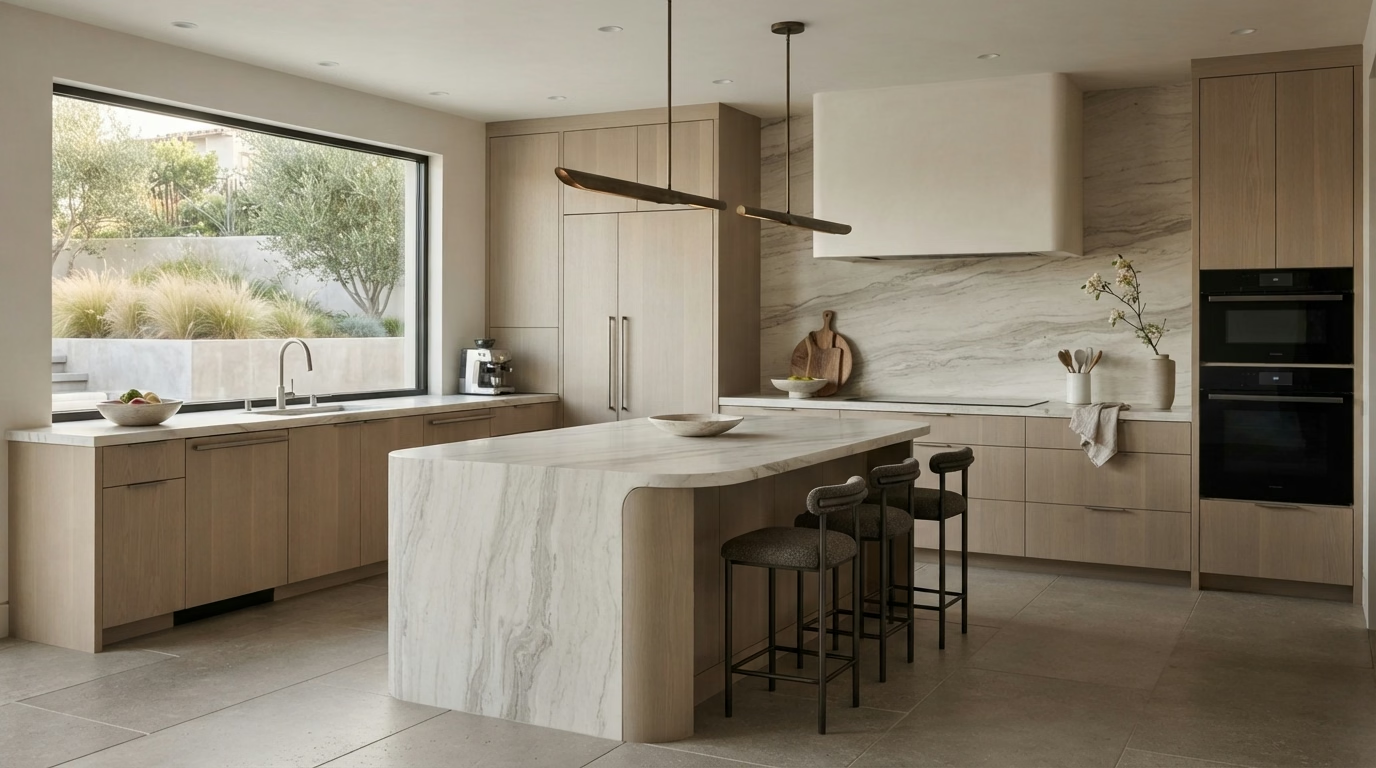
19 Rue Fontaine
Laguna Beach, CA
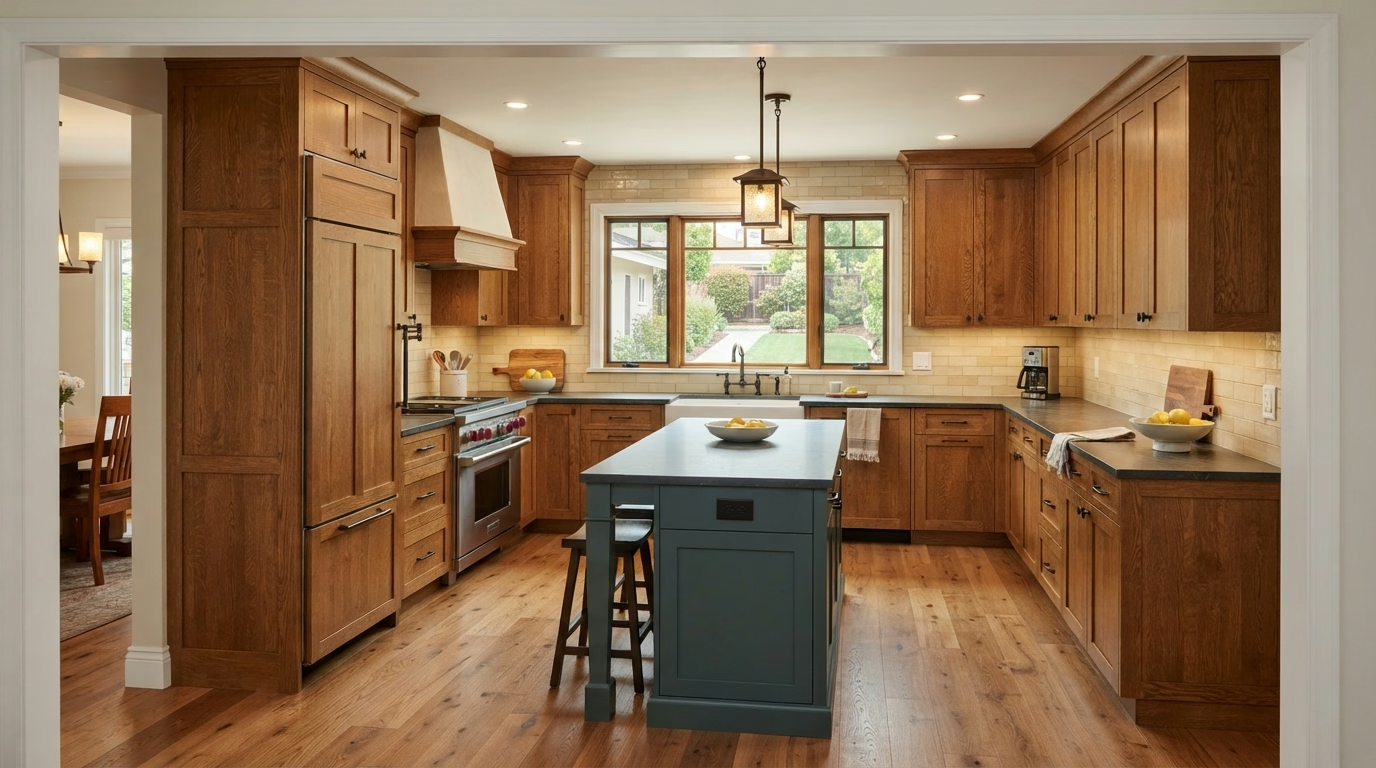
1180 Chapman Ave
Orange, CA
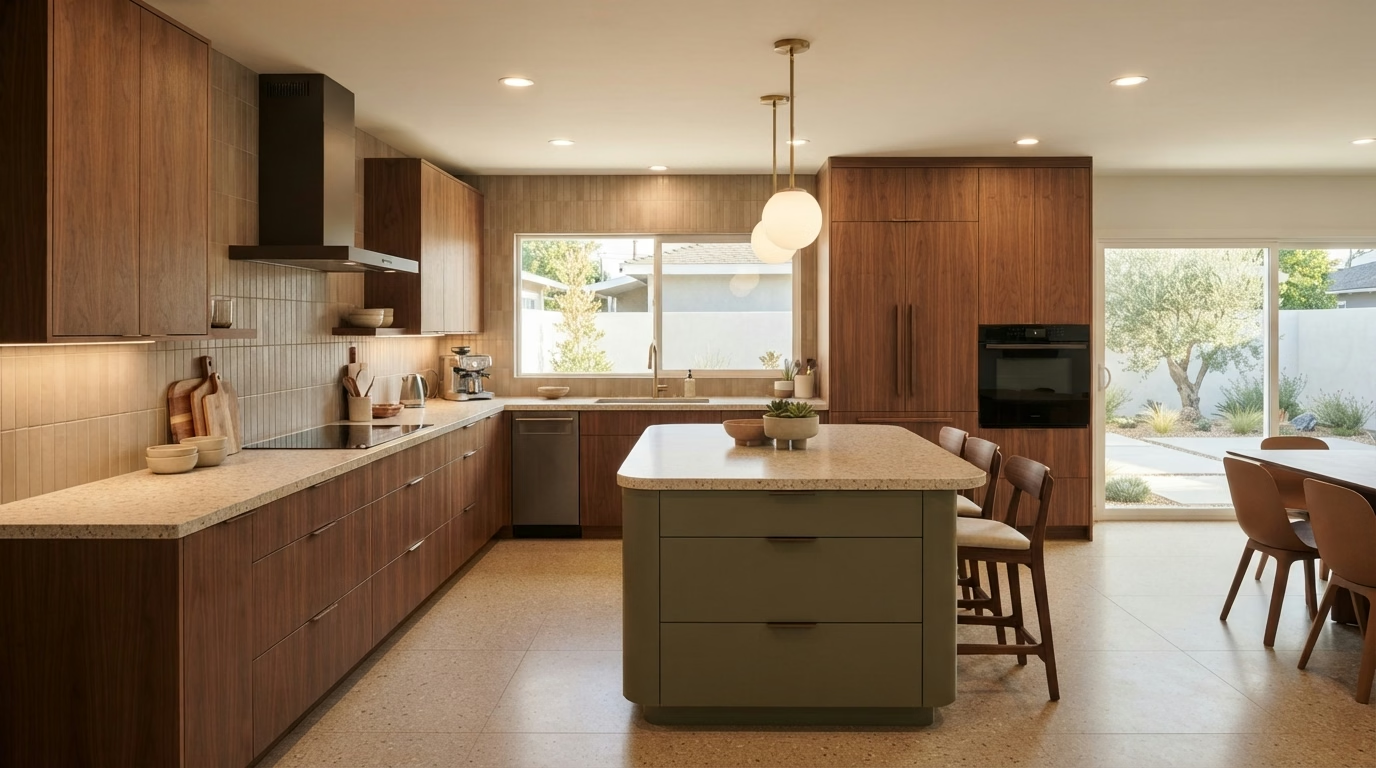
402 Wilshire Terrace
Fullerton, CA
1420 Bayview Ave
Newport Beach, CA
88 Sundance Ln
Irvine, CA
2217 Park Vista Dr
Anaheim Hills, CA
541 Ocean Breeze Ct
Huntington Beach, CA
3305 Vista Grande
Mission Viejo, CA
19 Rue Fontaine
Laguna Beach, CA
1180 Chapman Ave
Orange, CA
402 Wilshire Terrace
Fullerton, CA
Where We Install Floors
Our Floor Installation Service Areas
Local crews, local permit knowledge, and fast scheduling in every community below.
Related Kitchen Services
Our Other Kitchen Services You Also Get
Book Your Free Kitchen Floor Installation Estimate
Get material recommendations, an accurate measurement, and an itemized flooring quote from a licensed Orange County contractor.
- Free in-home consultation
- Itemized, transparent pricing
- Licensed & insured, CSLB verified
Request a Flooring Consultation
Share your flooring type, kitchen size and timeline and we will reply within one business day.
Common Flooring Questions
Kitchen Flooring Installation FAQs

How long does kitchen floor installation take in Orange County?
Most kitchen flooring installs take 2 to 5 days depending on square footage and whether subfloor repair is needed.
What is the best flooring for a kitchen?
Large-format porcelain tile and waterproof LVP are the top performers for durability and moisture resistance in kitchens.
Do I need a permit to replace my kitchen floor in Orange County?
A standard flooring replacement typically does not require a permit unless it involves subfloor structural changes.
How much does kitchen floor installation cost in Orange County?
Kitchen flooring installation typically runs $8 to $25 per square foot depending on material and subfloor condition.
Can you install kitchen flooring over my existing floor?
In some cases yes, particularly with LVP, but tile and hardwood usually require full removal of the old surface.
Is LVP (luxury vinyl plank) actually waterproof?
Yes, true LVP with a rigid core is fully waterproof and one of the most reliable choices for kitchen spills.
How do I maintain my new kitchen floor?
Sweep and damp mop regularly, and reseal natural stone or hardwood on the schedule recommended by the manufacturer.
Do you remove and dispose of the old kitchen floor?
Yes. Removal and disposal can be included in your itemized quote, so you can see it as a separate line.
What's the difference between porcelain and ceramic tile for kitchen floors?
Porcelain is denser and more water-resistant, while ceramic is more affordable and easier to cut on site.
Will new kitchen flooring increase my home's value?
It can. Fresh, durable flooring is one of the first things buyers notice, though the return depends on your finishes and local market.
Should I refinish or replace my kitchen hardwood floor?
Refinishing can restore solid hardwood with surface wear or light scratches, while replacement is usually better for warped or water-damaged boards. A quick on-site check shows which option fits your floor.
Can I put hardwood flooring in a kitchen?
Yes, with the right choice and care. Engineered hardwood is more stable around moisture than solid wood, and quick cleanup of spills near the sink and dishwasher protects either type.